
Superbuy Spreadsheet Guide: From a Product Idea to a Planned Parcel
Using a Superbuy spreadsheet works best when you divide the purchase into decisions. First identify the item. Then make the order unambiguous. Later, review what arrived and decide how to send it. Treating all of this as a single “buy” click makes small errors harder to notice.
This guide follows that sequence so you know what to check before moving on.
Step 1: Make the find specific
Choose a product category and identify the feature that matters most to you. It might be a bag opening wide enough for your belongings or a jacket long enough to wear over a sweatshirt. Use the spreadsheet overview to browse, then preserve the product and exact option using the links guide.
Do not solve a missing measurement by choosing your usual letter size. Compare the seller's method with a garment you know fits. If the important detail remains unclear, ask before purchase.
Step 2: Separate the cost stages
Write down the product price and the domestic-delivery or optional-service charges displayed for that order. Keep international delivery as a separate part of the plan. A low product price does not make a bulky parcel inexpensive.
The shipping calculator guide helps you understand an estimate. Early dimensions and weight may be assumptions; replace them with warehouse information when it becomes available. Never present your planning figure as a completed parcel charge.
Step 3: Submit an order another person can understand
Recheck colour, size, quantity and included components. Keep remarks focused on anything the buyer must clarify. “Please confirm the selected option includes the removable strap” is more actionable than “please choose the best one”.
Read the displayed purchasing warnings. An item being available from a seller does not settle whether the service can purchase or ship it under the conditions you need. If a warning affects your decision, resolve it before authorising the purchase.
Step 4: Follow the purchase rather than guessing from elapsed time
Distinguish an order awaiting action, an item purchased from the seller, domestic dispatch and warehouse arrival. These are different events. Use the order-status guide when the current stage is unclear.
If the buyer requests clarification, answer the specific question and keep the reply with the order. Avoid submitting a duplicate purchase merely because you have not seen the status you expected yet.
Step 5: Review the warehouse item
Compare the arriving item's visible features with your saved option. Check quantity and obvious damage, then investigate the detail most likely to change your decision. The QC guide explains how an overview and a targeted close-up answer different questions.
For a backpack, an exterior picture may confirm colour but not the width of the laptop compartment. For trousers, a label may confirm the selected size without proving the waist measurement. Request the information you actually need while the item remains accessible.
Step 6: Make the parcel plan
Select the items you want to send together, check their storage deadlines and review packing choices. Protection and volume are linked: retaining a box may matter for a fragile item, while a decorative box may not be worth its space to you.
Compare the routes available for the actual destination and contents. Read the quoted basis, timing estimate and restrictions instead of choosing by the largest carrier logo. The shipping guide and delivery-time guide separate cost comparisons from arrival expectations.
Step 7: Keep useful records until the purchase is resolved
Save the order details, warehouse evidence and parcel information privately. After delivery, check the contents before discarding packaging that may help explain a problem. If something differs, make a concise record of what was ordered, what arrived and the resolution you are requesting.
When should you pause?
Pause when the wrong variant is selected, the necessary measurement is missing, a restriction is unresolved or the parcel cost no longer fits your budget. Waiting for a specific answer is productive; repeatedly opening new lists without resolving the issue is not.
When your next step is clear, continue with that one task. You do not need a perfect shopping notebook, only enough accurate information to make the purchase deliberately.
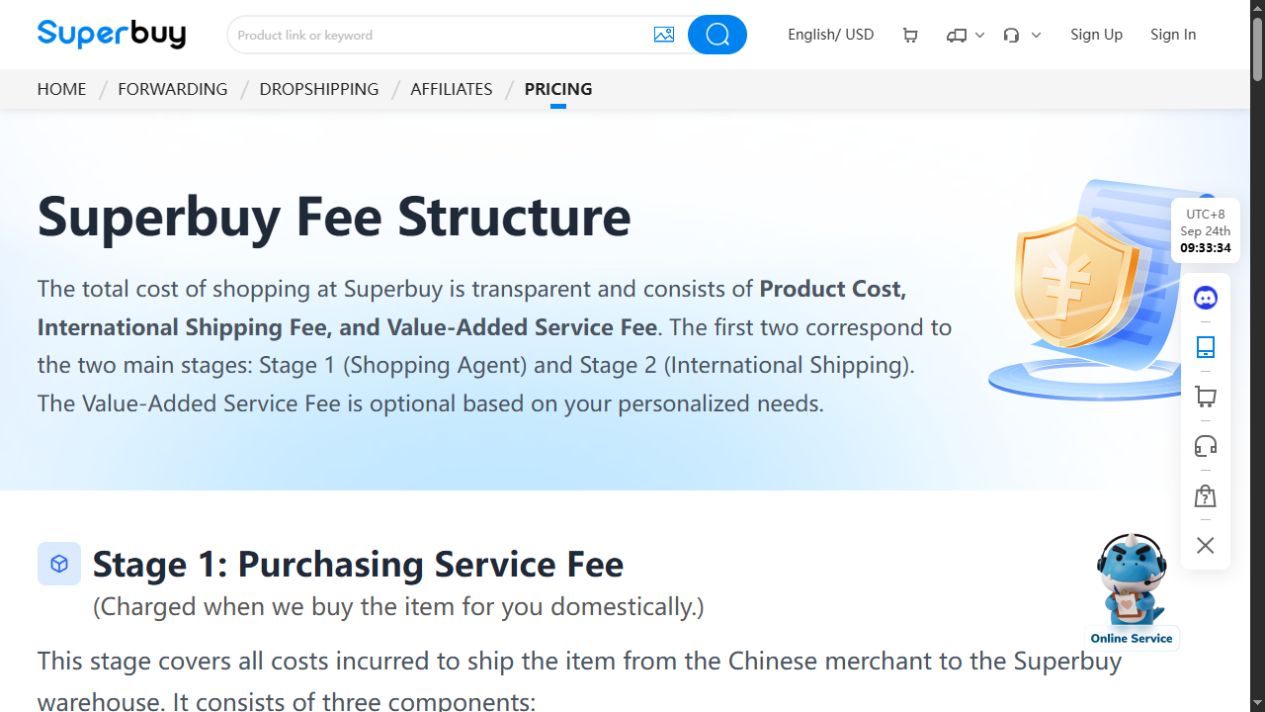
The dated interface view shows why the first purchase payment should not be treated as the complete delivered cost. Screenshot: 24 September 2026.
Put the checks into practice: view this long-sleeve top listing on Superbuy, then confirm the option and the detail that matters to your purchase.
From the seller’s listing to your parcel
Keep the original seller listing, chosen variant and quantity with your order. Before buying a set, check which pieces the selected option includes. If a seller proposes a replacement, compare it as a new choice rather than carrying over the old measurements.
Keep item progress separate from parcel progress. “Purchased” concerns the seller order; arrival at the warehouse is a later step, and international dispatch follows parcel submission. Check the actual item or parcel record before deciding what to do next.